


SUCCULENT CARE
Welcome to the Eleph Family!
Thank you for joining our workshop and bringing your botanical vision to life. Whether you crafted a desert landscape, a living wreath, or a Kokedama, your creation is now a unique piece of living art.
To ensure your plant thrives, we’ve created this Master Care Guide. Find your arrangement below for tailored advice on light, water, and seasonal care.
Click your creation below for tips and bookmark this page for future refreshes!
Succulent Bar
Crystal Glass Terrariums
Living Succulent Wreaths
Succulent Kokedama
Curated Succulent Arrangements
Succulent Troubleshooting (for all workshops)
Let's Stay Connected!

Potted Succulent Bar Creations
The perfect introduction to indoor gardening.
-
The Light Balance: Succulents crave bright, indirect light. Think of a room that feels "sunny" but where the sun doesn't directly hit the leaves. If your plant starts "stretching" (growing tall with wide spaces between leaves), it’s telling you it needs a brighter home.
-
Mastering the "Soak & Dry": The #1 rule for potted succulents is to let the soil dry out completely between waterings. When the soil feels like dust, give it a thorough soak. If your white terracotta pot doesn't have a drainage hole, use a small measuring cup to add just 2-3 tablespoons of water every few weeks to avoid pooling at the bottom.
-
Seasonal Shifts: During the winter, succulents go dormant and need significantly less water, sometimes only once a month. Always "read" the leaves; if they look plump, they are full of water!
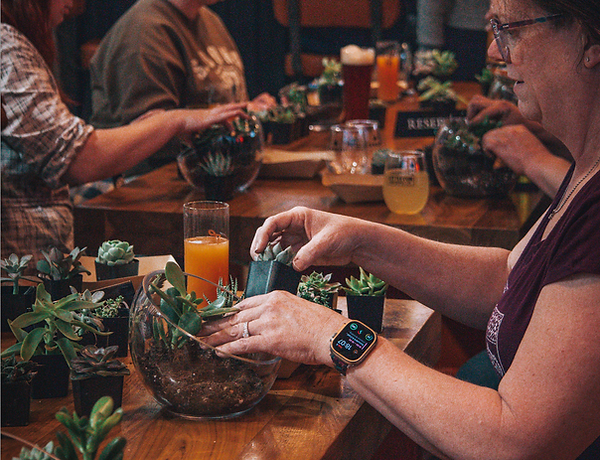
Succulent Glass Terrariums
Terrariums are beautiful, but because they lack drainage holes, they require a "less is more" approach. In Colorado where evaporation happens fast, water trapped at the bottom can cause rot.
Watering
-
Method: Use a syringe or squeeze bottle at the plant base. Never pour.
-
The Rule: No drainage means no soaking. If the glass is foggy, do not water.
-
Frequency: Every 10 days (Summer) or 14 days (Winter).
Light & Air
-
Placement: Bright, indirect light. Avoid direct sun; glass will magnify heat and "cook" plants.
-
Rotation: Turn the glass weekly to keep growth even.
-
Ventilation: Keep away from forced-air vents, especially during Colorado winters.
Troubleshooting
-
Stretching? Needs more light.
-
Shriveled? Dehydrated.
-
Mushy/Yellow? Overwatered; let dry for 2 weeks.

Succulent Wreath Care
Because we live in a high-altitude, low-humidity climate, your wreath needs a specific "rooting" schedule to thrive.
Follow these steps to ensure your succulents stay lush and healthy.
Phase 1: Callus (Days 1–7)
-
DO NOT WATER. The fresh stems need to "scab" over to prevent rot in our dry Colorado air.
-
Placement: Indoors in bright, indirect light. Keep away from direct heating vents.
Phase 2: Rooting (Weeks 2–4)
-
LIGHT MIST. Cuttings are now searching for moisture.
-
Action: Mist the moss surface once a week.
-
The Tug Test: Around week 4, gently wiggle a succulent. If it resists, roots have established!
Phase 3: Maintenance (Month 2+)
-
SOAK & DRY. Only water when the moss feels bone-dry and "crunchy."
-
The Soak: Submerge the moss base in 1 inch of water for 10 minutes.
-
Drip-Dry: Lay flat on a towel for 6 hours before re-hanging to protect your walls.
Quick Fixes
-
Stretching stems? Needs more light.
-
Shriveled leaves? Needs a longer soak.
-
Mushy/Yellow leaves? Overwatered; let dry for 2 weeks.
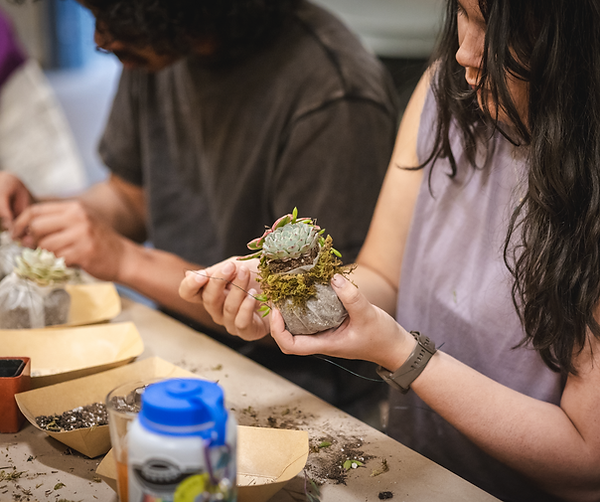
Succulent Kokedamas (Moss Balls)
Ancient Japanese art meets modern botanical style.
-
The Weight Indicator: Kokedamas are incredibly communicative. Pick yours up and if it feels heavy, it’s hydrated. If it feels light as a feather, it’s time for a bath. The outer moss should feel slightly damp or soft, never bone-dry and crunchy.
-
The Soaking Ritual: To water, submerge the moss ball in a bowl of room-temperature water (filtered is best!) for 10 to 15 minutes. You’ll see small bubbles rising, that’s the air leaving the root ball and being replaced by water. Only water the moss ball, not the succulent.
-
Display Tips: Keep your kokedama on a decorative tray or hung by its string in a spot with filtered light. Avoid placing it directly over a heater or AC vent, as the moss will dry out too quickly.

Curated Succulent Arrangements
A miniature ecosystem designed for harmony.
-
Focused Watering: In a crowded arrangement, leaves often overlap. It is vital to keep the leaves dry to prevent rot. Use a small watering can with a narrow spout to get water directly to the soil nestled between the plants.
-
Growth & Grooming: As your arrangement grows, the bottom leaves of your succulents will naturally shrivel and turn brown. This is normal! Gently pluck them away with tweezers to keep the arrangement looking tidy and to prevent pests from hiding in the debris.
-
Pruning for Beauty: If one plant grows significantly faster than the others, don't be afraid to give it a "haircut." You can even let the cutting dry for a few days and then pop it back into the soil to start a new plant!
Succulent Troubleshooting
Don’t worry, plants are resilient! Here is how to read the signs.
-
Stretching (Etiolation): If your succulent is growing tall and thin with wide gaps between the leaves, it’s craving more light. Move it to a sunnier spot, and it will begin to grow more compactly again.
-
Wrinkled, Soft Leaves: This is a classic sign of thirst. If the leaves look like raisins, give your plant a thorough soak. It should plump back up within 24–48 hours.
-
Yellow, Mushy Leaves: This usually indicates overwatering. Stop watering immediately and allow the soil to dry out completely. If the center of the plant is still green, it can often recover with some "tough love" (neglect).
-
Leaf Shedding: It is perfectly normal for the bottom-most leaves to dry up and fall off as the plant grows. Simply pluck them away. However, if leaves are falling off from the top or middle, check your watering levels.
-
White "Cotton" Spots: If you see tiny white fuzzy spots, you might have Mealybugs. Dab them with a Q-tip dipped in rubbing alcohol to clear them away quickly.
Let’s Stay Connected
We would love to see how your new botanical companion settles into its new home! Your creativity is what makes these workshops so special to us.
-
Show Us Your Growth: Tag us in your photos on Instagram @eleph.succs ! Seeing your plants thrive is the best part of our day!
-
Share the Love: Did you have a great time at our workshop? [Leave us a Google Review here]. Your kind words help our small business grow and allow us to bring more "greenery therapy" to the community!
-
Need a Little Help? If your plant is looking a bit "under the weather" and the troubleshooting guide above didn't quite solve it, send us a clear photo at aloha@elephboutique.com! We’re always happy to offer a digital check-up.
-
Join Us Again: Ready to try a different style? Whether you want to master the Succulent Kokedama or build a massive Terrarium, check out our upcoming workshop schedule to book your next seat at the table.